<?xml version="1.0" encoding="utf-8"?>
<feed xmlns="http://www.w3.org/2005/Atom">
    <id>https://blog.06222001.xyz/work/case-studies</id>
    <title>Keannu Blog</title>
    <updated>2024-10-18T00:00:00.000Z</updated>
    <generator>https://github.com/jpmonette/feed</generator>
    <link rel="alternate" href="https://blog.06222001.xyz/work/case-studies"/>
    <subtitle>Keannu Blog</subtitle>
    <icon>https://blog.06222001.xyz/img/favicon.ico</icon>
    <entry>
        <title type="html"><![CDATA[Documentation That Ships With the Pull Request]]></title>
        <id>https://blog.06222001.xyz/work/case-studies/Documentation That Ships With the Pull Request</id>
        <link href="https://blog.06222001.xyz/work/case-studies/Documentation That Ships With the Pull Request"/>
        <updated>2024-10-18T00:00:00.000Z</updated>
        <summary type="html"><![CDATA[At Kroll, the Cyber Risk division's platform API surface grew continuously. Every new vendor integration, every new detection module, added endpoints — and the reference documentation was written on a separate treadmill, after the fact, by engineers who had already moved on to the next thing. By the time a page was updated, the code underneath it had moved again.]]></summary>
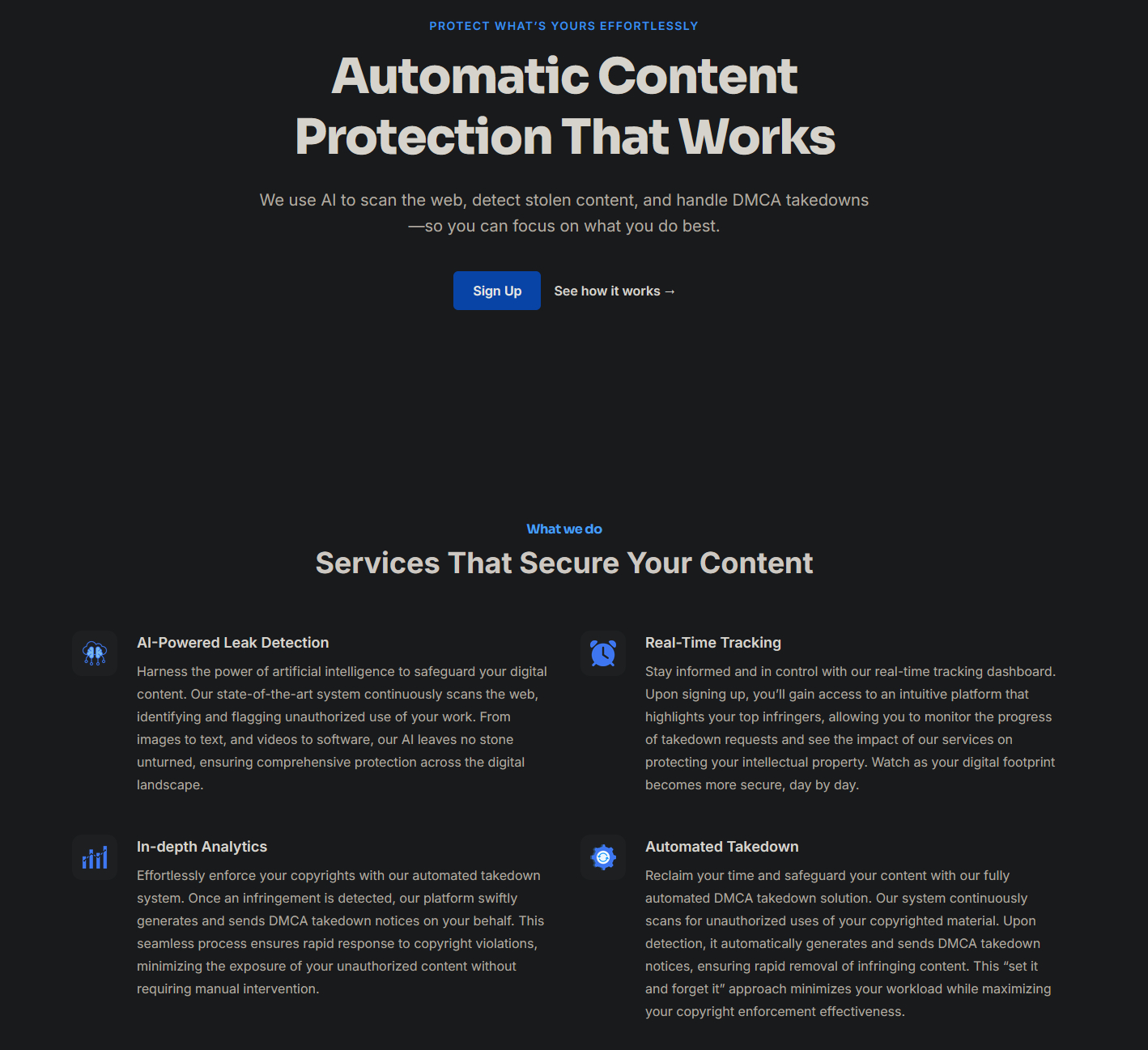
        <content type="html"><![CDATA[<p><img decoding="async" loading="lazy" src="https://blog.06222001.xyz/assets/images/597805e78b465af7fd0886fbf9d01caf_MD5-078c2bbacf8a381c1ff417f98ebd5bd5.jpeg" width="2243" height="980" class="img_ev3q"></p>
<p>At Kroll, the Cyber Risk division's platform API surface grew continuously. Every new vendor integration, every new detection module, added endpoints — and the reference documentation was written on a separate treadmill, after the fact, by engineers who had already moved on to the next thing. By the time a page was updated, the code underneath it had moved again.</p>
<p>Stale reference docs are worse than absent ones. Internal teams and enterprise clients treat them as authoritative, build against them, and only discover the gap in production. But the docs never lost for lack of effort — they lost because the work started too late. The only place with complete context on a change was the pull request itself: the description explained the intent, and the diff held the exact code.</p>
<p>With a platform engineer mindset, I designed and shipped a documentation pipeline that used the PR as its source of truth — triggered on change, pulling the relevant source at the exact commit, matching it against the team's documentation template, and drafting each changed endpoint for a human to verify before it reached the published shelf.</p>
<h2 class="anchor anchorWithStickyNavbar_LWe7" id="the-trade-offs">The Trade-Offs<a href="https://blog.06222001.xyz/work/case-studies/Documentation%20That%20Ships%20With%20the%20Pull%20Request#the-trade-offs" class="hash-link" aria-label="Direct link to The Trade-Offs" title="Direct link to The Trade-Offs" translate="no">​</a></h2>
<p>Automating documentation is risky because fluent prose reads as accurate. A generated reference page that names the wrong parameter or omits an error code is worse than a blank page — it will be trusted, copied into client integrations, and cited in support tickets. So the pipeline was never allowed to publish. Its only output was a draft, and a human stayed on the last mile.</p>
<p>Being generous with context fails in the other direction. Feed an entire pull request into a model and you get confident description of files that didn't change, drifting further toward generic prose as the diff grows. So the flow narrowed twice: it fetched only the specific source files at the commit in question, and it separated identifying what changed from writing it up, one endpoint at a time.</p>
<p>Instead of choosing between machine-speed volume and human-written accuracy, I focused on <strong>narrow, template-bound generation behind a mandatory review gate</strong> — drafting at machine speed, publishing at human speed.</p>
<h2 class="anchor anchorWithStickyNavbar_LWe7" id="execution">Execution<a href="https://blog.06222001.xyz/work/case-studies/Documentation%20That%20Ships%20With%20the%20Pull%20Request#execution" class="hash-link" aria-label="Direct link to Execution" title="Direct link to Execution" translate="no">​</a></h2>
<ul>
<li><strong>PR-Triggered Pipeline:</strong> The flow fired on pull request and took the description as its statement of intent — what changed, and why. That was the context no later documentation pass could reconstruct.</li>
<li><strong>Exact-Commit Code Resolution:</strong> Rather than reading a working branch, the flow resolved the specific source files at the PR's commit SHA, so every generated page reflected the code in that change and nothing else.</li>
<li><strong>Two-Phase Generation:</strong> A first pass identified which endpoints the PR actually touched; a second wrote each one up individually against the team's endpoint documentation template. Splitting <em>what changed</em> from <em>describe what changed</em> kept each step narrow and each output reviewable.</li>
<li><strong>Draft-First, Publish-Last:</strong> Output landed as a draft file in the documentation workspace for a human to check against the diff before promotion. The automation removed the blank-page problem, not the judgment.</li>
<li><strong>Built Where the Work Already Lived:</strong> Implemented as a low-code flow inside the Microsoft stack the division already ran, sitting directly beside Azure DevOps and Jira. No new infrastructure, no service to maintain, and the team could adjust it without pulling in an engineer.</li>
</ul>
<h2 class="anchor anchorWithStickyNavbar_LWe7" id="outcome">Outcome<a href="https://blog.06222001.xyz/work/case-studies/Documentation%20That%20Ships%20With%20the%20Pull%20Request#outcome" class="hash-link" aria-label="Direct link to Outcome" title="Direct link to Outcome" translate="no">​</a></h2>
<ul>
<li><strong>Documentation Kept Pace With Code:</strong> Endpoint pages were drafted at the moment of change, while the context was still intact, instead of waiting on a documentation cycle that never arrived.</li>
<li><strong>Drift Caught Before Release:</strong> Reviewing drafts against the diff surfaced undocumented parameters and breaking changes while the PR was still open, rather than months later.</li>
<li><strong>Authorship Became Review:</strong> Engineers stopped writing reference docs from scratch and started verifying them — moving the expensive part of the work from production to judgment.</li>
<li><strong>Reusable Across Integrations:</strong> Because output was shaped by the team's own template and sourced from the commit itself, the same flow applied to new modules and vendor integrations without per-project prompt work.</li>
</ul>]]></content>
    </entry>
    <entry>
        <title type="html"><![CDATA[Unified Threat Ingestion at Global Scale]]></title>
        <id>https://blog.06222001.xyz/work/case-studies/Unified Threat Ingestion at Global Scale</id>
        <link href="https://blog.06222001.xyz/work/case-studies/Unified Threat Ingestion at Global Scale"/>
        <updated>2024-10-18T00:00:00.000Z</updated>
        <summary type="html"><![CDATA[Following Kroll’s acquisition of Redscan, the Cyber Risk division already had a foundational threat-management platform in place, but cyber threats were constantly evolving—creating new attack surfaces and pushing enterprise clients to adopt newer security modules across dozens of disconnected tools.]]></summary>
        <content type="html"><![CDATA[<p><img decoding="async" loading="lazy" src="https://blog.06222001.xyz/assets/images/b0212b8dd880d35571387eb3d45a916f_MD5-b4bbe87f9b265e2c0bd1bd86078658c8.jpeg" width="718" height="427" class="img_ev3q"></p>
<p>Following Kroll’s acquisition of Redscan, the Cyber Risk division already had a foundational threat-management platform in place, but cyber threats were constantly evolving—creating new attack surfaces and pushing enterprise clients to adopt newer security modules across dozens of disconnected tools.</p>
<p>While the core system existed, it needed to both handle massive alert volumes and rapidly ingest modern threat intelligence— utilizing standardized STIX threat feeds, and emerging products from CrowdStrike, SentinelOne, and others—without creating blind spots or compliance bottlenecks.</p>
<p>As Lead Python Developer for Platform ARM, I stepped into an active environment to scale the core ingestion engine and roll out net-new threat intelligence capabilities, supporting over 50 million annual alerts across 2,000+ enterprise customers.</p>
<h2 class="anchor anchorWithStickyNavbar_LWe7" id="the-trade-offs">The Trade-Offs<a href="https://blog.06222001.xyz/work/case-studies/Unified%20Threat%20Ingestion%20at%20Global%20Scale#the-trade-offs" class="hash-link" aria-label="Direct link to The Trade-Offs" title="Direct link to The Trade-Offs" translate="no">​</a></h2>
<p>Evolving a live, mission-critical security platform comes with two major risks: if you move too aggressively to integrate new vendor products and data formats, you risk breaking existing customer pipelines or exposing sensitive data (PII) in a shared environment.</p>
<p>On the flip side, playing it too safe—or failing to ingest new threat signals and industry standards as vendors release new capabilities—leaves clients blind to modern attack vectors, while over-provisioning fixed servers drives up cloud costs.</p>
<p>Instead of rebuilding from scratch or letting legacy constraints slow innovation, I focused on <strong>modernizing the existing pipelines with elastic cloud capacity and modular integrations</strong> while establishing <strong>strict governance, monitoring, and team standards</strong>—allowing us to rapidly ship new threat intelligence capabilities on top of a rock-solid foundation.</p>
<h2 class="anchor anchorWithStickyNavbar_LWe7" id="execution">Execution<a href="https://blog.06222001.xyz/work/case-studies/Unified%20Threat%20Ingestion%20at%20Global%20Scale#execution" class="hash-link" aria-label="Direct link to Execution" title="Direct link to Execution" translate="no">​</a></h2>
<p>Over 21 months, I took ownership of the core ingestion domain to both scale existing operations and roll out new threat-detection capabilities:</p>
<ul>
<li><strong>Net-New Threat Intelligence &amp; STIX Rollouts:</strong> Designed and launched ingestion pipelines for emerging security modules and structured threat data—including Indicators of Compromise (IoCs) and standardized STIX feeds—across CrowdStrike, SentinelOne, and 20+ other providers to keep defense capabilities ahead of evolving risks.</li>
<li><strong>Elastic Cloud Architecture:</strong> Evolved the alert ingestion engine on serverless cloud infrastructure (Azure Functions) to process 50M+ annual alerts, automatically expanding capacity during sudden threat spikes and scaling down during normal traffic.</li>
<li><strong>Governance, Observability &amp; Standards:</strong> Partnered with security governance to enforce strict PII handling and Python standards, while implementing real-time health monitoring (Splunk and Azure alerting) and automated deployment pipelines so new integrations could ship safely.</li>
<li><strong>Cross-Team Crisis Leadership:</strong> Served as the central point of contact during a critical alert ingestion outage, coordinating 40+ engineers and security stakeholders across 4+ teams over a weekend to restore full visibility without data loss.</li>
</ul>
<h2 class="anchor anchorWithStickyNavbar_LWe7" id="outcome">Outcome<a href="https://blog.06222001.xyz/work/case-studies/Unified%20Threat%20Ingestion%20at%20Global%20Scale#outcome" class="hash-link" aria-label="Direct link to Outcome" title="Direct link to Outcome" translate="no">​</a></h2>
<ul>
<li><strong>Future-Proofed Threat Visibility:</strong> Expanded platform coverage beyond standard alerts by rolling out ingestion for next-generation vendor modules, IoCs, and standardized STIX threat feeds—empowering analysts to correlate and catch emerging threats faster.</li>
<li><strong>Brownfield-to-Scale Evolution:</strong> Successfully scaled an existing live platform to reliably process 50M+ annual security alerts across 20+ vendor ecosystems for 2,000+ global enterprise clients.</li>
<li><strong>Resilient Incident Response:</strong> Protected client trust and operational continuity during high-pressure production incidents through real-time observability and decisive cross-team leadership.</li>
<li><strong>Compliance &amp; Velocity at Scale:</strong> Safeguarded multi-tenant PII data while accelerating new developer ramp-up and integration rollouts through standardized onboarding, documentation, and automated deployments.</li>
</ul>]]></content>
    </entry>
    <entry>
        <title type="html"><![CDATA[Automated Takedown against Digital Piracy]]></title>
        <id>https://blog.06222001.xyz/work/case-studies/Automated Takedown against Digital Piracy</id>
        <link href="https://blog.06222001.xyz/work/case-studies/Automated Takedown against Digital Piracy"/>
        <updated>2024-01-15T00:00:00.000Z</updated>
        <summary type="html"><![CDATA[Disclaimer: Built as a solo engineer over five months. The build shipped; the commercial rollout isn't mine to claim.]]></summary>
        <content type="html"><![CDATA[<p><img decoding="async" loading="lazy" src="https://blog.06222001.xyz/assets/images/6f6d11230b75e9464df873f2289bf9f1_MD5-bace628c1c566a2c2f6f1a9473fa9a96.jpeg" width="1418" height="1297" class="img_ev3q"></p>
<blockquote>
<p>Disclaimer: Built as a solo engineer over five months. The build shipped; the commercial rollout isn't mine to claim.</p>
</blockquote>
<p>A social media management company noticed a growing problem among its creators and clients: their paid content was constantly being stolen, copied, and redistributed across the web.</p>
<p>At the time (2024), fighting piracy was a slow, manual grind—staff had to hunt down stolen links, file takedown notices by hand, and manually track follow-ups.</p>
<p>Leadership wanted to spin up a standalone product (<strong>SimpleDMCA</strong>) to automate this process and sell it as a subscription service, but needed to go from zero to a reliable, revenue-generating platform in five months.</p>
<h2 class="anchor anchorWithStickyNavbar_LWe7" id="the-trade-offs">The Trade-Offs<a href="https://blog.06222001.xyz/work/case-studies/Automated%20Takedown%20against%20Digital%20Piracy#the-trade-offs" class="hash-link" aria-label="Direct link to The Trade-Offs" title="Direct link to The Trade-Offs" translate="no">​</a></h2>
<p>Full automation in copyright enforcement is risky: if a system blindly fires off takedown notices without verification, it creates legal headaches and damages client trust.</p>
<p>On the flip side, paying for massive, always-on server capacity to constantly scan the web would eat up profit margins before the business even scaled.</p>
<p>Instead of choosing between slow manual labor or reckless full automation, I designed a <strong>human-in-the-loop workflow</strong> paired with <strong>pay-as-you-go cloud capacity</strong>—automating the heavy lifting while keeping a human checkpoint before anything critical goes out.</p>
<h2 class="anchor anchorWithStickyNavbar_LWe7" id="execution">Execution<a href="https://blog.06222001.xyz/work/case-studies/Automated%20Takedown%20against%20Digital%20Piracy#execution" class="hash-link" aria-label="Direct link to Execution" title="Direct link to Execution" translate="no">​</a></h2>
<p>In five months, I architected and launched the core platform from the ground up:</p>
<ul>
<li><strong>Automated Discovery &amp; Tracking:</strong> Replaced manual web searches with automated scanning pipelines that continuously find stolen media, log evidence, and track takedown statuses.</li>
<li><strong>Human-in-the-Loop Guardrails:</strong> Built an approval workflow so reviewers only step in to verify flagged matches, dramatically cutting manual labor without risking false claims.</li>
<li><strong>Commercial &amp; Billing Readiness:</strong> Integrated subscription billing (Stripe) and automated deployment pipelines so new features could ship safely without breaking live customer scans.</li>
<li><strong>Elastic Cost Control:</strong> Configured the underlying cloud infrastructure to automatically scale up during heavy scanning bursts and scale down to near-zero when idle, keeping operating costs tightly tied to actual customer demand.</li>
</ul>
<h2 class="anchor anchorWithStickyNavbar_LWe7" id="outcome">Outcome<a href="https://blog.06222001.xyz/work/case-studies/Automated%20Takedown%20against%20Digital%20Piracy#outcome" class="hash-link" aria-label="Direct link to Outcome" title="Direct link to Outcome" translate="no">​</a></h2>
<ul>
<li><strong>0-to-1 Build</strong>: Internal manual bottleneck to a working platform with subscription billing, live in five months.</li>
<li><strong>Cross-Entity Leverage:</strong> Tapped into existing parent and sibling agency workflows, turning established internal processes and an immediate creator client base into a built-in launchpad instead of building in a vacuum.</li>
<li><strong>Human-in-the-Loop Precision:</strong> Automated repetitive link-hunting, evidence logging, and follow-up tracking while preserving a 100% human verification gate on final takedowns.</li>
<li><strong>Margin-Protected Scaling:</strong> Engineered elastic infrastructure that expands during heavy scanning bursts and scales down when idle—eliminating fixed server waste and tying overhead directly to revenue.</li>
</ul>]]></content>
    </entry>
    <entry>
        <title type="html"><![CDATA[Turning a Scanner into a Self-Indexing Archive]]></title>
        <id>https://blog.06222001.xyz/work/case-studies/Turning a Scanner into a Self-Indexing Archive</id>
        <link href="https://blog.06222001.xyz/work/case-studies/Turning a Scanner into a Self-Indexing Archive"/>
        <updated>2024-01-15T00:00:00.000Z</updated>
        <summary type="html"><![CDATA[Disclaimer: Commissioned thesis build. I owned the system end-to-end — architecture, backend, frontend, and deployment.]]></summary>
        <content type="html"><![CDATA[<blockquote>
<p>Disclaimer: Commissioned thesis build. I owned the system end-to-end — architecture, backend, frontend, and deployment.</p>
</blockquote>
<p>A university records office had a scanner and a filing cabinet, and the gap between them was a person. Every document that came off the scanner had to be opened, read, dated, attributed to a sender, classified, and named by hand before it could be filed. Retrieval worked the same way: if someone wanted a copy, a staff member had to remember the document existed, find it, and pull it. Request intake was paper, and approval lived in signatures.</p>
<p>They wanted the scanner itself to be the intake. A document dropped into a watched folder should appear in the archive already classified, dated, and searchable, with the request-and-release workflow attached to it.</p>
<p>It was commissioned as a thesis system and built solo — a backend platform, a role-aware web frontend, and an on-premises document pipeline that read the scans.</p>
<h2 class="anchor anchorWithStickyNavbar_LWe7" id="the-trade-offs">The Trade-Offs<a href="https://blog.06222001.xyz/work/case-studies/Turning%20a%20Scanner%20into%20a%20Self-Indexing%20Archive#the-trade-offs" class="hash-link" aria-label="Direct link to The Trade-Offs" title="Direct link to The Trade-Offs" translate="no">​</a></h2>
<p>Reading a scan with a vision model beats text extraction on exactly the documents a records office handles most: letterheads, stamps, and annotations that a text layer flattens away. But a model can be wrong or unreachable, and a pipeline that stalls on a bad scan is worse than no pipeline at all. So enrichment was never allowed to be a hard dependency — when the model fails, the system falls back to conventional OCR and metadata scanning, files the document anyway, and flags it for a human.</p>
<p>The alternative was a cloud OCR and classification service, and in early 2024 that was not a serious option: the hosted services were still rudimentary on stamped and letterheaded forms, the per-page costs added up against a public institution's budget, and every scan would have meant sending student records and personnel memoranda off-site. Inference stayed local — slower to build and more to operate, but the only version a records officer could sign off on.</p>
<p>A model that misfiles a document makes an archive worse than a filing cabinet, because the record is present but unreachable. So the model was never allowed to invent a taxonomy. It classifies against the categories the office already uses, offers new ones only as a deliberate escape hatch, and staff can correct anything afterward.</p>
<p>The last decision was the one that actually determined whether this shipped: hand-rolling the platform and its interface, or standing on existing scaffolding. Hand-rolling would have produced something more bespoke and taken far longer. Scaffolding — a mature backend framework, a modern frontend starter, a component library — meant the effort went into the scan pipeline and the workflow logic instead of the plumbing, and a working, deployable system existed early enough to iterate on with real documents.</p>
<h2 class="anchor anchorWithStickyNavbar_LWe7" id="execution">Execution<a href="https://blog.06222001.xyz/work/case-studies/Turning%20a%20Scanner%20into%20a%20Self-Indexing%20Archive#execution" class="hash-link" aria-label="Direct link to Execution" title="Direct link to Execution" translate="no">​</a></h2>
<ul>
<li><strong>Scanner-to-record pipeline:</strong> A watched folder, a file-system observer, and an enrichment pass that reads the page as an image, then classifies it and extracts the sender, subject, and date. The result is a filed document with its storage path mirroring the office's own taxonomy.</li>
<li><strong>Graceful degradation:</strong> Any enrichment failure drops to conventional OCR and metadata scanning, fills safe defaults, files the document, and raises a staff alert naming it. No scan is silently lost, and no queue is blocked by one bad page.</li>
<li><strong>Grounded classification:</strong> Candidate categories are drawn from the vocabulary already in the archive, so the system extends the office's filing language rather than importing a generic one. Every extraction is schema-constrained and deterministic.</li>
<li><strong>Role-shaped access:</strong> Five roles across clients, staff, head, planning, and administration, each enforced at the API boundary. The important part is what roles cannot see — clients browse a catalogue that carries no file links, while staff and head get the download path and the approval authority.</li>
<li><strong>Paperwork that stays paperwork:</strong> The request lifecycle ends in the office's actual forms, generated from request data and printable, with the requester's email standing in as a valid signature. The system outputs a document the office can file, not a screenshot of a database.</li>
<li><strong>Feedback to planning:</strong> Service-quality surveys are captured digitally and routed to a planning role that sees only aggregate results — separating the people who act on service quality from the people who handle individual records.</li>
<li><strong>Reproducible by default:</strong> One command brings the system up, generates its own schema and data documentation, and captures outbound mail locally so activation, approval, and release can be demonstrated end to end without external services.</li>
</ul>
<h2 class="anchor anchorWithStickyNavbar_LWe7" id="outcome">Outcome<a href="https://blog.06222001.xyz/work/case-studies/Turning%20a%20Scanner%20into%20a%20Self-Indexing%20Archive#outcome" class="hash-link" aria-label="Direct link to Outcome" title="Direct link to Outcome" translate="no">​</a></h2>
<ul>
<li><strong>Zero-touch intake:</strong> Documents go from scanner output to classified, dated, attributed, searchable records without a staff member opening a single file.</li>
<li><strong>Retrieval replaces recall:</strong> Search spans document contents alongside type, sender, and date, so finding a record no longer depends on remembering it existed.</li>
<li><strong>One lifecycle instead of three:</strong> Request, review, approval, release, and satisfaction feedback live in one system with a defensible audit trail, replacing paper forms, email threads, and a filing cabinet.</li>
<li><strong>A build that documents itself:</strong> Schema and data-model documentation are produced by the running system, so the thesis artifacts were a byproduct of working software rather than a separate write-up assembled afterward.</li>
<li><strong>Known limits, stated plainly:</strong> Duplicate detection keys on the model's generated title, enrichment reads the opening page rather than the whole document, and the default configuration is a demo posture rather than a hardened deployment.</li>
</ul>
<hr>]]></content>
    </entry>
</feed>